 🌿 NATURE POWERED WELLNESS — BACKED BY SCIENCE
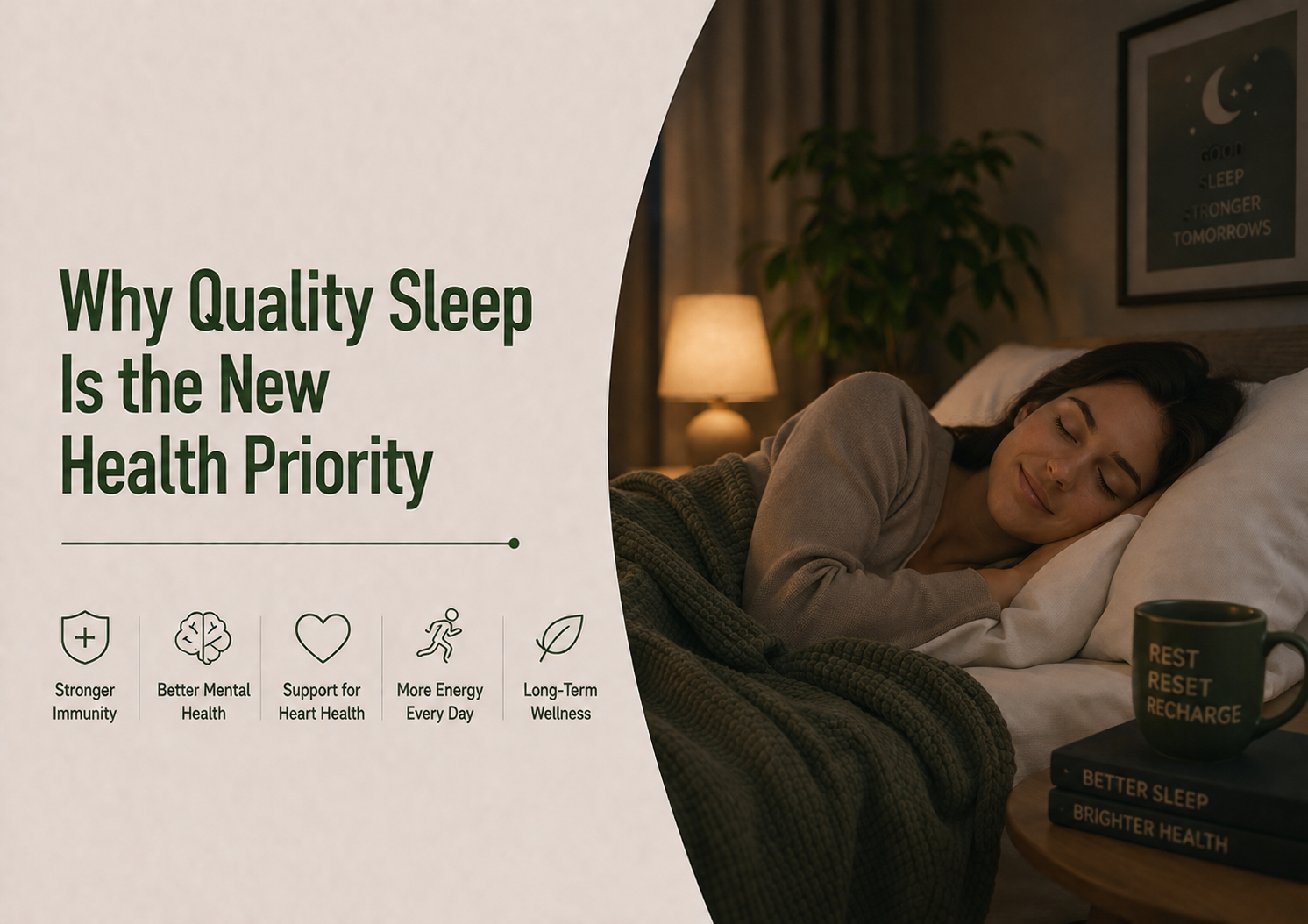
Why Quality Sleep Is the New Health Priority
Good Health Doesn’t Start in the Morning It Starts the Night Before
When we think about living a healthy lifestyle, we often focus on eating nutritious food, staying active, and exercising regularly. While these habits are essential, there’s another factor that’s becoming just as important—quality sleep.
Sleep is much more than simply resting after a long day. It’s the time when your body repairs itself, your mind processes the day’s experiences, and your energy is restored. Yet, despite sleeping for seven or eight hours, many people still wake up feeling tired, unfocused, and low on energy.
The reason? It’s not just about how long you sleep—it’s about how well you sleep.
Let’s explore why quality sleep has become one of the biggest priorities for overall health and wellbeing.
What Is Quality Sleep?
Quality sleep means giving your body enough uninterrupted time to move through its natural sleep cycle, including the deep, restorative stages that support recovery.
During quality sleep, your body works to:
- Restore energy levels
- Repair muscles and tissues
- Support immune function
- Improve memory and concentration
- Balance mood and emotions
- Help the brain recover from daily stress
This is why someone can spend eight hours in bed but still wake up feeling exhausted if their sleep is frequently disturbed.
Why Is Sleep Becoming a Health Priority?
Modern lifestyles have changed the way we sleep. Long work hours, constant notifications, and busy schedules often make it difficult for the body to fully relax before bedtime.
Some of the most common factors affecting sleep quality include:
Increased Stress
Daily responsibilities and an overactive mind can make it difficult to unwind, leading to lighter and less restorative sleep.
Too Much Screen Time
Using phones, laptops, or watching TV late at night can keep the brain stimulated when it should be preparing for rest.
Irregular Sleep Schedules
Going to bed and waking up at different times each day can disrupt your body’s natural sleep-wake cycle.
Constant Mental Stimulation
A busy lifestyle filled with endless information and distractions can make it harder to transition into a relaxed state before bedtime.
Why Deep Sleep Matters
Deep sleep is one of the most important stages of the sleep cycle because it’s when the body focuses on recovery and renewal.
Getting enough deep sleep may support:
- Feeling refreshed in the morning
- Better physical recovery
- Improved mental clarity
- A greater sense of relaxation
- More consistent energy throughout the day
That’s why improving sleep quality has become just as important as getting enough sleep.
Simple Habits That Support Better Sleep
Quality sleep often begins with healthy daily habits rather than quick fixes.
A few simple changes can make a big difference:
- Maintain a regular sleep schedule.
- Reduce screen time before bed.
- Create a calm, comfortable sleep environment.
- Practice relaxation techniques like deep breathing or meditation.
- Make bedtime part of your daily wellness routine.
Small, consistent habits often lead to better long-term sleep quality.
A Modern Approach to Better Sleep
As people become more aware of the importance of sleep, they’re looking for natural ways to support healthier bedtime routines.
That’s the philosophy behind Drowzze. Made with carefully selected natural ingredients traditionally associated with relaxation and sleep support, Drowzze is designed to complement healthy sleep habits—not replace them.
By making sleep a daily wellness ritual, Drowzze encourages a more mindful approach to rest, recovery, and overall wellbeing.
Better Sleep, Better Days
The quality of your nights has a direct impact on the quality of your days. When you prioritize restful sleep, you give your body and mind the opportunity to recover, recharge, and perform at their best.
Healthy sleep isn’t a luxury anymore—it’s one of the most important foundations of modern wellness.
Drowzze – A natural approach to making quality sleep a part of your daily wellness ritual.
Frequently Asked Questions (FAQs)
Most adults generally need around 7–9 hours of sleep, but the quality and consistency of sleep are equally important.
Feeling tired after sleep can happen when sleep quality is poor, sleep is frequently interrupted, or the body does not complete restorative sleep cycles.
Maintaining a regular sleep routine, reducing stimulation before bedtime, creating a relaxing environment, and supporting healthy sleep habits can help improve sleep quality.
Yes. A consistent night-time routine helps signal the body that it is time to relax and prepare for sleep.