 🌿 NATURE POWERED WELLNESS — BACKED BY SCIENCE
Natural Ingredients In Ayurvedic Hair Oil: Complete Guide To Herbal Hair Care
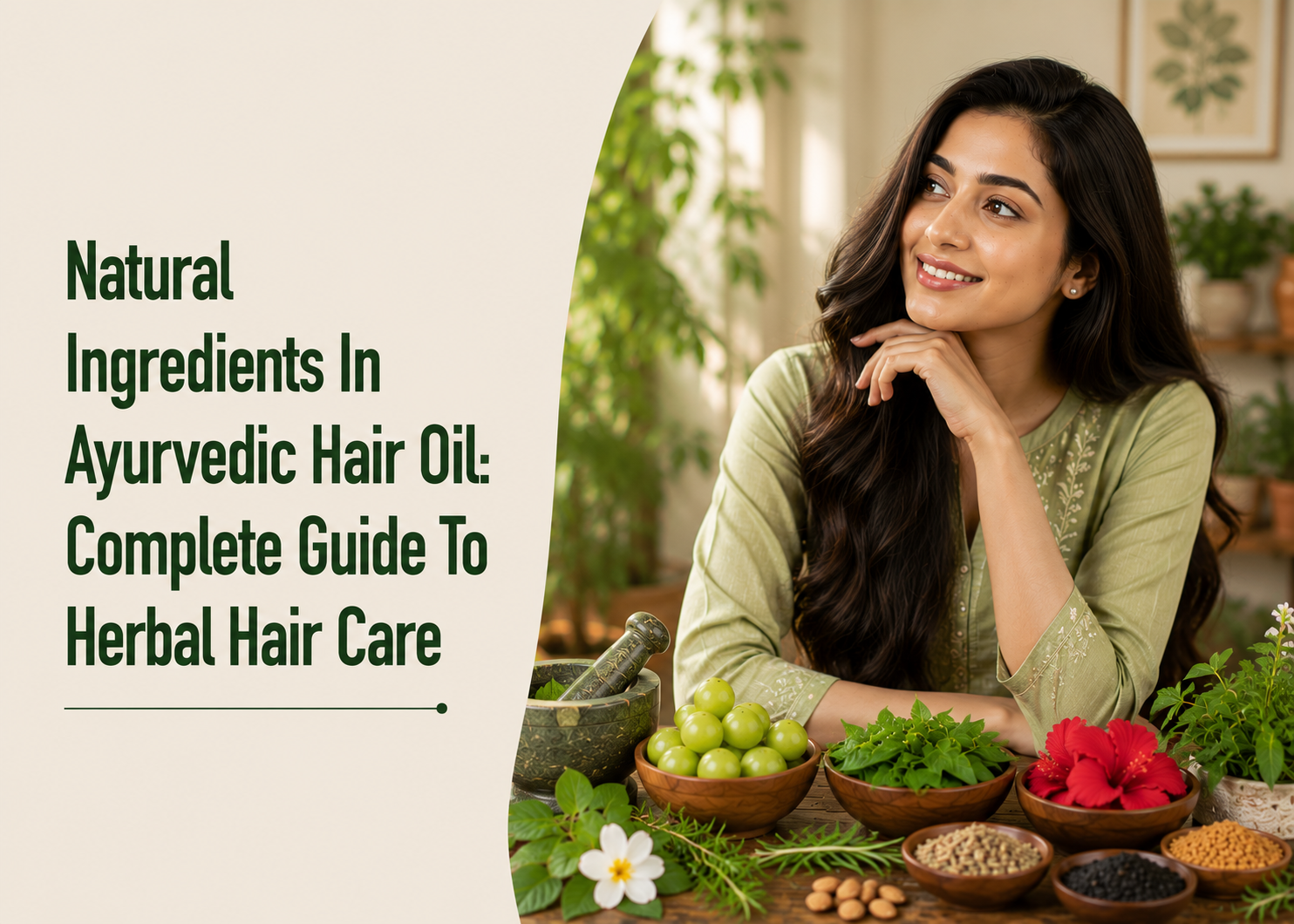
In recent years, more people have started choosing natural and herbal hair care products as part of their daily self-care routine. Growing awareness about traditional wellness practices and plant-based ingredients has encouraged consumers to move towards Ayurvedic hair oils that nourish the scalp naturally.
Ayurveda has used herbs, flowers, and natural oils for centuries to support healthy-looking hair and scalp wellness. Unlike products that rely heavily on synthetic ingredients, Ayurvedic hair oils combine multiple herbs, each offering unique traditional benefits. Together, these ingredients work to nourish the scalp, maintain moisture balance, and improve the overall appearance of hair.
In this guide, we’ll explore the key natural ingredients commonly found in Ayurvedic hair oils and understand why they continue to be trusted in traditional hair care.
Why Choose Natural Ingredients For Hair Care?
Natural ingredients have long been valued in Ayurveda for their ability to support overall hair and scalp wellness. Instead of focusing on a single concern, herbal formulations combine multiple botanicals to provide balanced nourishment.
People choose herbal hair oils because they:
- Support scalp nourishment naturally
- Help maintain soft and manageable hair
- Complement regular hair care routines
- Contain plant-based ingredients
- Follow traditional Ayurvedic principles
A consistent routine with herbal hair oil can contribute to healthier-looking hair over time.
Important Herbs In Ayurvedic Hair Oil
Bhringraj The King Of Ayurvedic Hair Herbs
Bhringraj is one of the most respected herbs in Ayurvedic hair care. It has been traditionally used in herbal oils to nourish the scalp and support healthy-looking hair.
Traditional Benefits Of Bhringraj
- Supports hair nourishment
- Helps maintain healthy-looking hair
- Promotes scalp care
- Supports natural hair shine
- Complements complete herbal formulations
Its popularity has earned it the title “King of Herbs” in traditional hair care.
Amla Traditional Support For Natural Shine
Amla, also known as Indian Gooseberry, is one of Ayurveda’s most widely used ingredients for hair wellness.
It is traditionally valued for helping to:
- Maintain natural hair shine
- Support hair strength
- Nourish the scalp
- Improve hair texture
- Keep hair looking soft and healthy
Amla works well with other herbs, making it an essential ingredient in many herbal hair oils.
Brahmi Nourishment For The Scalp
Brahmi has been used in Ayurveda for centuries for both wellness and hair care.
When included in herbal hair oils, Brahmi helps:
- Nourish the scalp
- Support healthy-looking hair
- Provide a soothing scalp massage experience
- Maintain scalp comfort
- Complement other Ayurvedic herbs
Regular scalp massage with Brahmi-infused oil can become a relaxing part of your hair care routine.
Jatamansi – Traditional Herbal Care For The Scalp
Jatamansi is another important Ayurvedic herb commonly found in herbal hair oils.
Traditionally, it is used to:
- Support scalp nourishment
- Help maintain soft and manageable hair
- Complement relaxing scalp massage
- Enhance complete Ayurvedic hair care routines
Its traditional role makes it a valuable addition to herbal formulations.
Neem Supporting A Healthy Scalp Environment
Neem is widely recognized in Ayurveda for its cleansing and balancing properties.
It is commonly included in hair oils to help:
- Maintain scalp cleanliness
- Support a balanced scalp environment
- Complement herbal hair formulations
- Promote overall scalp wellness
- Support healthy-looking hair
Neem works especially well when combined with other nourishing herbs.
Musta Traditional Herbal Support
Musta is an Ayurvedic herb traditionally used in various herbal wellness preparations, including hair oils.
It helps:
- Support scalp balance
- Complement herbal nourishment
- Maintain overall scalp wellness
- Enhance traditional Ayurvedic formulations
Although less widely known than some herbs, Musta plays an important supporting role in complete herbal blends.
Gulab – A Refreshing Herbal Ingredient
Gulab (Rose) is valued not only for its pleasant fragrance but also for its refreshing qualities in Ayurvedic hair care.
Traditionally, Gulab helps:
- Refresh the scalp
- Improve the overall hair care experience
- Complement nourishing herbal ingredients
- Add a soothing touch to herbal oil formulations
Its natural aroma also makes hair oil massage more enjoyable.
Why Herbal Combinations Work Better
Ayurvedic hair oils rarely rely on a single herb. Instead, they combine multiple ingredients that complement one another.
A balanced herbal formula may include:
- Bhringraj for hair nourishment
- Amla for natural shine
- Brahmi for scalp nourishment
- Jatamansi for scalp comfort
- Neem for scalp balance
- Musta for traditional herbal support
- Gulab for a refreshing hair care experience
Together, these herbs create a holistic approach to hair and scalp wellness.
Benefits Of Using Ayurvedic Herbal Hair Oil Regularly
Making herbal hair oil a part of your routine can support overall hair care in several ways.
Regular use may help:
- Nourish the scalp naturally
- Maintain healthy-looking hair
- Improve hair softness
- Support smooth and manageable hair
- Enhance natural shine
- Promote a relaxing scalp massage experience
Consistency is one of the most important aspects of Ayurvedic hair care.
How To Include Herbal Hair Oil In Your Routine
Following a simple routine helps you get the most from your Ayurvedic hair oil.
Step 1: Apply The Oil
Take a small amount of herbal hair oil and apply it evenly across your scalp.
Step 2: Massage Gently
Massage using your fingertips in circular motions for 5–10 minutes.
Step 3: Leave It On
Allow the oil to remain on your scalp for 2–3 hours or overnight for a nourishing hair care experience.
Step 4: Wash Gently
Use a mild shampoo or herbal cleanser to remove excess oil while maintaining scalp comfort.
Using herbal hair oil 2–3 times a week can easily fit into most hair care routines.
Lifestyle Habits That Complement Herbal Hair Care
Healthy-looking hair is supported by both external care and healthy daily habits.
To maintain overall hair wellness:
- Drink enough water every day
- Eat a balanced diet rich in protein and vitamins
- Avoid excessive heat styling
- Protect hair from pollution
- Get adequate sleep
- Massage your scalp regularly with herbal oil
These simple practices work together to support healthy-looking hair naturally.
Frequently Asked Questions (FAQs)
Natural ingredients have been traditionally used in Ayurveda to nourish the scalp, maintain healthy-looking hair, and provide a holistic approach to hair care using plant-based herbs.
Popular Ayurvedic hair oils often contain Bhringraj, Amla, Brahmi, Neem, Jatamansi, Musta, and Gulab, each offering unique traditional benefits for scalp and hair wellness.
Applying Ayurvedic herbal hair oil 2–3 times a week with a gentle scalp massage is commonly recommended as part of a regular hair care routine.
Yes. Herbal hair oils are generally suitable for different hair types and can be incorporated into a regular hair care routine to help maintain a nourished scalp and healthy-looking hair.