 🌿 NATURE POWERED WELLNESS — BACKED BY SCIENCE
How Stress Affects Sleep Quality: Understanding The Mind Sleep Connection
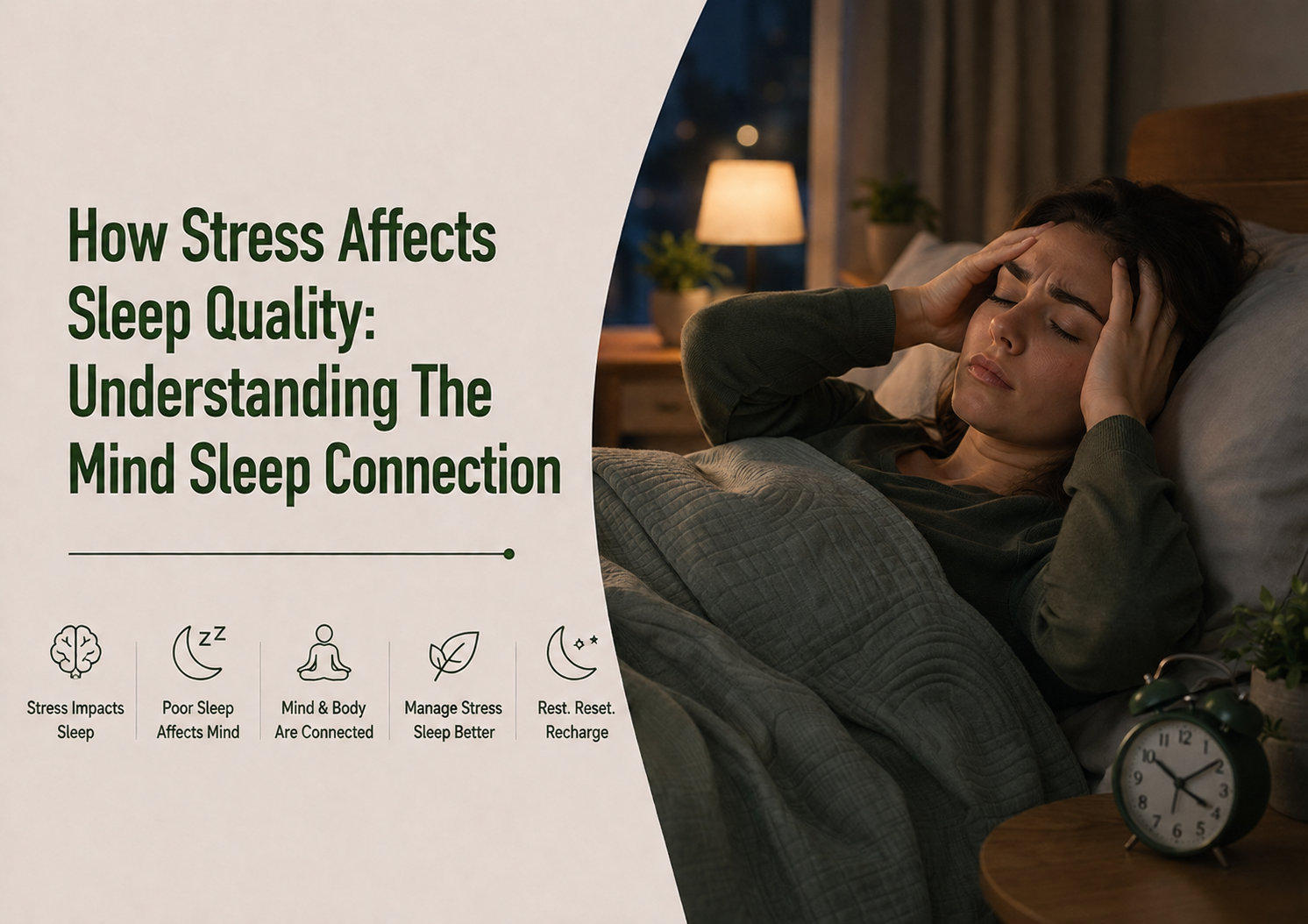
Feeling Tired but Unable to Sleep? Stress Could Be the Missing Piece.
After a long day, your body may feel exhausted, but the moment you lie down, your mind suddenly becomes active. You replay conversations, think about tomorrow’s tasks, or worry about unfinished work. Even though you’re tired, falling asleep feels harder than it should.
If you’ve experienced this, you’re not alone.
In today’s fast-paced world, stress has become a part of everyday life. While a little stress is normal, ongoing mental pressure can make it difficult for your body to relax and enjoy the restorative sleep it needs. The result? You wake up feeling tired, unfocused, and ready for another cycle of stress.
Let’s understand how stress and sleep are connected—and what you can do to improve both.
How Does Stress Affect Sleep?
When you’re stressed, your body naturally becomes more alert. This response is helpful during the day when you need to stay focused, but it can become a problem if it continues into the night.
Instead of relaxing before bed, you may experience:
- Racing thoughts
- Difficulty switching off
- Physical tension
- Trouble falling asleep
- Restless or interrupted sleep
Over time, this can reduce the quality of your sleep, even if you’re spending enough hours in bed.
Why Does Stress Make It Harder to Sleep?
1. Your Mind Stays Active
One of the most common effects of stress is an overactive mind. As soon as you get into bed, your brain may start thinking about work, responsibilities, or tomorrow’s plans, making it difficult to fully relax.
2. Your Body Finds It Hard to Unwind
Stress doesn’t only affect your thoughts—it can also keep your body tense. When your muscles and mind remain in an alert state, falling into deep, restorative sleep becomes more challenging.
3. Your Sleep Gets Interrupted
Some people fall asleep easily but wake up several times during the night. Interrupted sleep can reduce the amount of restorative sleep your body gets, leaving you feeling tired the next morning.
The Stress–Sleep Cycle
Stress and poor sleep often go hand in hand. High stress can make it difficult to sleep, while poor sleep can make everyday challenges feel even more overwhelming.
This creates a cycle where:
- Stress affects sleep quality.
- Poor sleep reduces energy and focus.
- Daily tasks feel more difficult.
- Stress levels continue to increase.
Breaking this cycle often starts with improving your bedtime habits and making relaxation part of your daily routine.
Simple Ways to Sleep Better During Stress
The good news is that small lifestyle changes can help your mind and body prepare for restful sleep.
Here are a few habits worth trying:
- Maintain a consistent sleep schedule.
- Reduce screen time before bed.
- Practice deep breathing or meditation.
- Read a book or listen to calming music.
- Keep your bedroom quiet, dark, and comfortable.
These simple practices help create the right environment for your body to naturally transition into sleep.
Turn Bedtime into a Wellness Ritual
Quality sleep doesn’t begin the moment you close your eyes—it starts with how you prepare for the night.
That’s the idea behind Drowzze. Designed with carefully selected natural ingredients traditionally associated with relaxation and sleep support, Drowzze complements healthy bedtime habits and encourages a more mindful approach to sleep.
Combined with a calming night-time routine, it helps make restful sleep part of your everyday wellness journey.
A Calmer Mind Leads to Better Sleep
Stress may be a part of modern life, but it doesn’t have to control your nights. By slowing down before bed, creating healthy sleep habits, and giving your mind time to relax, you can support better-quality sleep and wake up feeling more refreshed.
Because when your mind rests well, your body is better prepared for the day ahead.
Drowzze – Supporting your natural journey towards restful sleep and refreshed mornings.
Frequently Asked Questions (FAQs)
Yes. Stress can affect the body’s ability to relax, making it harder to fall asleep or maintain restful sleep.
During the day, distractions keep many thoughts occupied. At night, reduced external activity can make worries and thoughts feel more noticeable.
A consistent bedtime routine, relaxation practices, reducing screen exposure, and creating a peaceful sleep environment can support better sleep.
Quality sleep supports physical and mental recovery, which can help the body handle daily stress more effectively.