 🌿 NATURE POWERED WELLNESS — BACKED BY SCIENCE
Deep Sleep Explained: The Secret Behind Morning Energy
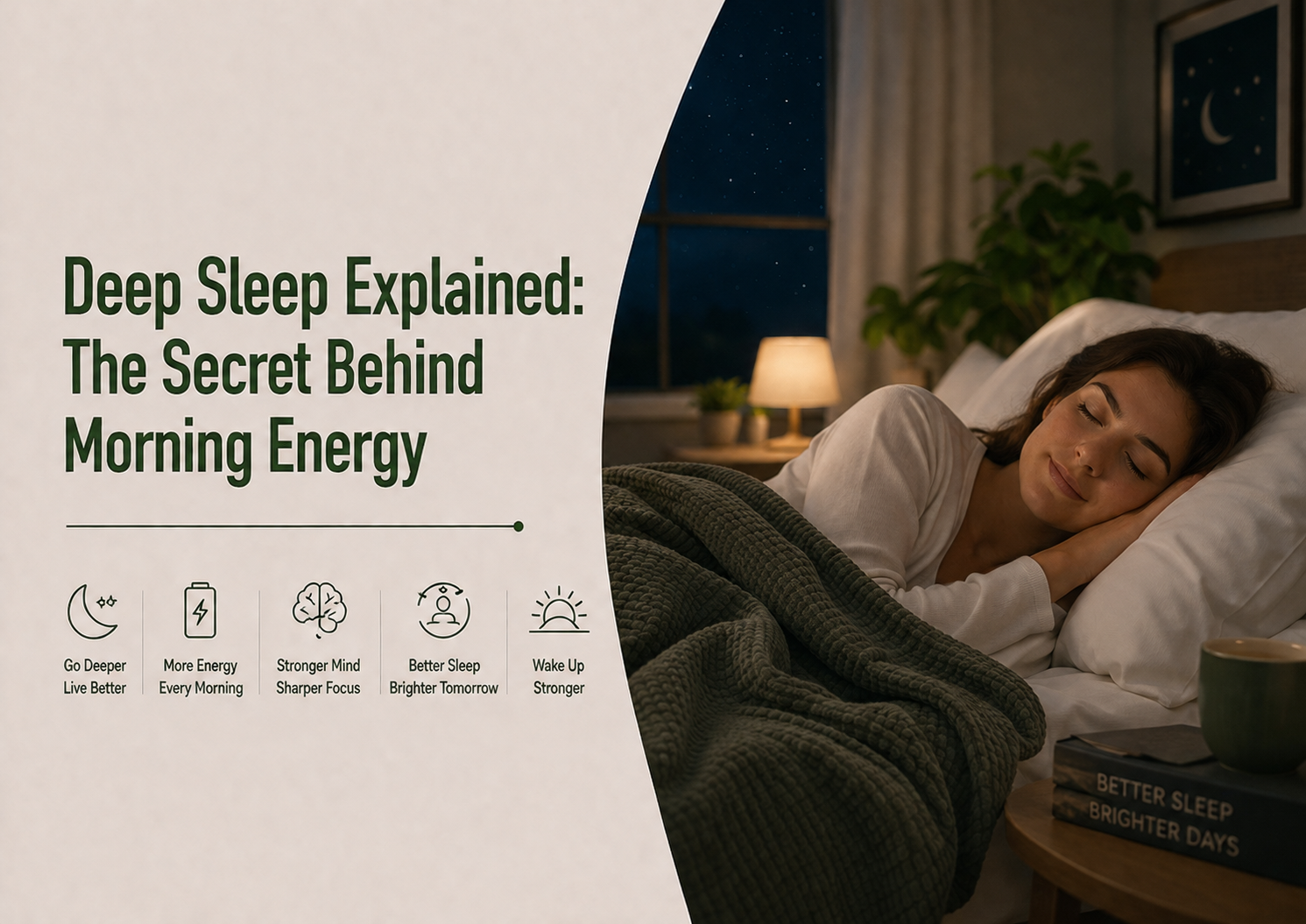
Ever Wonder Why You Still Feel Tired After a Full Night’s Sleep?
You’ve slept for seven or eight hours, yet you wake up feeling exhausted, groggy, or lacking the energy to start your day. If this sounds familiar, the problem may not be how long you slept—it could be how well you slept.
One of the biggest factors behind waking up refreshed is deep sleep. It’s the stage of sleep where your body focuses on recovery, restoration, and preparing you for the day ahead. Without enough deep sleep, even a full night’s rest may not leave you feeling energized.
Let’s understand why deep sleep matters and how you can naturally support it.
What Is Deep Sleep?
Deep sleep is one of the most restorative stages of your natural sleep cycle. During this phase, your body slows down, your muscles relax, and important recovery processes take place.
While you’re in deep sleep, your body works to:
- Restore energy levels
- Support muscle and tissue recovery
- Process memories and information
- Help the brain recover from daily stress
- Prepare you to wake up feeling refreshed
Unlike light sleep, deep sleep is harder to wake from because your body is fully focused on recovery.
Why Is Deep Sleep Important?
Deep sleep does much more than help you rest—it supports how you feel and perform throughout the day.
Better Physical Recovery
After a busy day, your body needs time to repair and recharge. Deep sleep provides the opportunity for natural recovery, helping you wake up feeling more refreshed.
Improved Mental Clarity
A well-rested brain processes information more efficiently. Quality sleep supports better focus, concentration, memory, and decision-making throughout the day.
More Energy During the Day
When your body gets enough restorative sleep, it can recharge more effectively, making it easier to stay active and productive.
Emotional Balance
Quality sleep also plays an important role in supporting a calmer mood and helping your body manage everyday stress.
What Can Reduce Deep Sleep?
Modern lifestyles often make it harder to get the restorative sleep our bodies need.
Some common factors include:
- Stress and overthinking before bedtime
- Excessive screen time at night
- Irregular sleep schedules
- A noisy or uncomfortable sleep environment
These habits can interrupt your natural sleep cycle and reduce the amount of deep sleep you get.
Simple Ways to Support Better Deep Sleep
Improving deep sleep doesn’t always require major changes. Small, consistent habits can make a meaningful difference over time.
Try to:
- Go to bed and wake up at the same time every day.
- Reduce screen time before sleeping.
- Create a cool, quiet, and comfortable bedroom.
- Practice relaxation techniques like meditation or deep breathing.
- Build a calming bedtime routine that helps your body unwind naturally.
The goal is to create the right environment for your body to transition into restful sleep.
Make Deep Sleep Part of Your Wellness Routine
Better sleep starts before you get into bed. A consistent night-time routine helps signal to your body that it’s time to slow down and prepare for rest.
That’s the philosophy behind Drowzze. Made with carefully selected natural ingredients traditionally associated with relaxation and sleep support, Drowzze is designed to complement healthy bedtime habits and encourage a more mindful approach to sleep.
When combined with a balanced lifestyle and a consistent sleep routine, it helps make quality rest a daily wellness ritual.
Better Nights, Better Mornings
A productive day begins with a restful night. While sleep duration is important, deep, restorative sleep is what truly helps you wake up feeling refreshed, focused, and ready for the day ahead.
By improving your bedtime habits and prioritizing sleep quality, you give your body the opportunity to recover naturally every night.
Drowzze – Supporting your journey towards restful sleep and refreshed mornings.
Frequently Asked Questions (FAQs)
Deep sleep needs vary by individual, age, lifestyle, and overall health. The focus should be on maintaining consistent, quality sleep.
Waking tired may happen when sleep quality is poor, sleep is interrupted, or the body does not get enough restorative sleep stages.
A consistent bedtime routine, reduced stress before sleep, a comfortable environment, and healthy sleep habits can support better sleep quality.
Both are important. Total sleep time and sleep quality work together to support overall wellbeing.